Friday, December 28, 2012

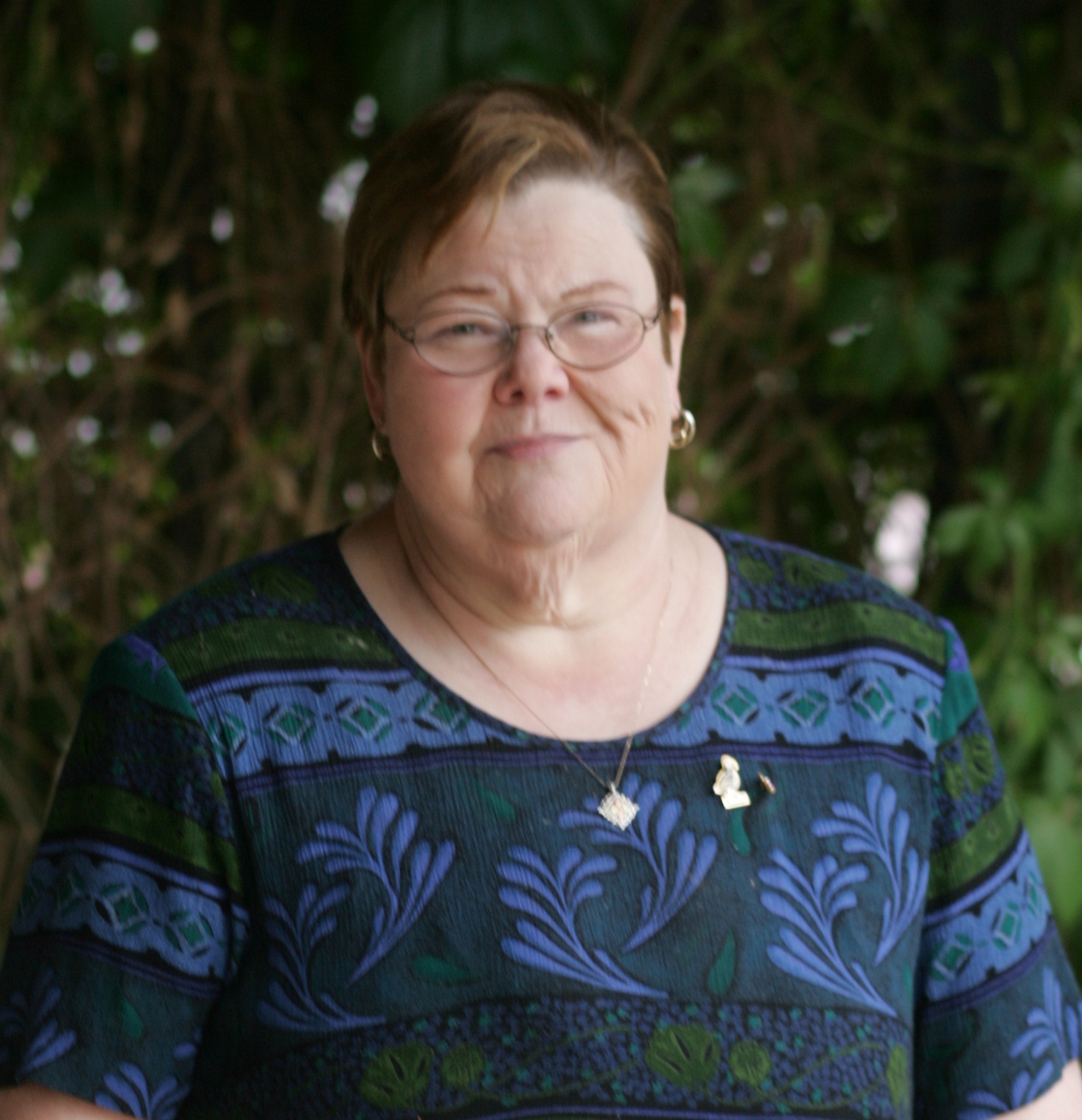
Marilyn Ashby


My sister, Marilyn Ashby, 67, Passed away peacefully on Wednesday, December 26, 2012 of natural causes. Marilyn was born November 15, 1945 in Spanish Fork, Utah to Gerald and Phylis Ashby. She lived in Spanish Fork throughout her life and attended Spanish Fork High School.

Funeral services will be held on Saturday, December 29, 2012 at 11:00 a.m. at the Spanish Fork 5th Ward Chapel, 1006 E 200 South, Spanish Fork, Utah Interment will be in the Spanish Fork City Cemetery. Family and friends may call at the Church on Saturday from 9:30-10:45 a.m. prior to the services.

Read her obituary at http://www.walkerspanishfork.com/obit/marilyn-ashby/


Sunday, December 2, 2012

fréttir desember 2012


Christmas in Iceland
Christmas in Iceland is in many ways similar to Christmas in the United States. Families get together, enjoy good food and exchange presents. It is Iceland’s longest holiday; everything is closed from noon on Christmas Eve until December 27.
One major difference between Christmas in Iceland and in the U.S. is that Icelanders celebrate on Christmas Eve. The family gets together in the evening and that is when presents are exchanged. During the following two days everyone goes to Christmas parties and meets with grandparents, uncles, aunts, cousins and friends.
Christmas Eve is the high point of the holiday season in Iceland, and the sumptuous dinner is just the beginning of the night. But what the children have been waiting for so long - the opening of packages - cannot take place until a few details have been attended to: the table has to be cleared and the dishes washed, but there are many willing hands for that.
In centuries past, most people would slaughter a lamb and have ‘kjötsúpa’ for Christmas dinner, a meat broth with bits of meat in it. Kjötsúpa is still common in Iceland, although not as Christmas dinner. Poorer families would have ptarmigan for Christmas.
Nowadays, the most common Christmas dishes in Iceland are ham (hamborgarahryggur), smoked lamb (hangikjöt) and ptarmigan (rjúpa). Ptarmigan is no longer a food for the poor and has become very popular with Icelanders, and the ptarmigan hunting season is one of the most anticipated events of the year for hunters. These dished are lavishly prepared with side dishes including potatoes, prepared in many different ways, peas and beans, gravy, jam etc. The cook usually spends most of the day cooking, with help, of course, from other family members.
Icelanders have not one, but thirteen Santas, or Yule Lads. These lads are not related to Santa Claus in any way. They are descendants of trolls and were originally used to scare children. In the last century, however, they have become a lot friendlier.

Gleðileg jól


Storytelling Then and Now
The Sagas of the Icelanders are exceptional tales of every life and historic events that were kept alive using the oral tradition for two to three hundred years before they were recorded in written format. The stories found in the Sagas are not typical heroic literature, but rather tales of flesh and blood people burdened with the heroic legacy of the Vikings. Storytellings in the Icelandic Sagas are tales of people deeply rooted in the real world of their day. These stories explore the human problems of love and hate, fate and freedom, crime and punishment, travel and exile. The Sagas of the Icelanders lets us know of the concerns and affairs of the people who lived between 930 and 1030.
I find it fascinating that Todd Hansen great-grandson of Eyjolfur Eiriksson and Jarthrudur Runolfsdottir, immigrants to Utah from Iceland in the 1880s, keeps the storytelling tradition going. Todd hosts BYUTV's "The Story Trek." This show sets out to prove how fascinating so-called ordinary people actually are. Through the random, door-to-door interviews Todd conducts, you meet quirky, serious, intelligent, fun people who make you laugh, smile, cry, and think.
Todd was the Master of Ceremony for the Icelandic Association of Utah’s Sesquicentennial Gala, June 24, 2005.

Emigrant of the Month Dec. 2012

HALLDÓR JÓNSSON

Halldor was born 1 March 1856 at Skurdbaer, Medallandsthing, Vestur Skaftafell. His parents are Jon Jonson, born 24 February 1829 at Audnar, Medallandsthing, Vestur Skaftafell, died 26 April 1858 at sea; and Margret Jonsdottir, born 2 March 1829 at Sydri-Steinsmyri, Medllandsthing, Vestur Skaftafell, died 1 August 1911 at Hafnarfirdi, Gardar a Alptanesi, Gullbringu.
He married Gudrun Jonsdottir in January of 1879. Gudrun was born 4 June 1850 at Grof, Gufunes, Kjosar. In 1880 they joined The Church of Jesus Christ of Latter-day Saints and were baptized by Elder Jon Eyvindsson, 13 November 1880. Halldor and Gudrun, along with their son Johann, left Iceland in 1881 with a company of twenty-two, under the leadership of Elder Jon Eyvindsson and Elder Jacob Jonsson. The company left Reykjavik on the steamer Cameoens, and came by way of Granton, Scotland, Liverpool, England and then to New York, crossing the ocean on the steamship Nevada. They arrived in New York 23 July 1881 and left the same evening for Salt Lake City, arriving in Salt Lake City 7 August 1881. They left Salt Lake City the next day for Spanish Fork, Utah.
Halldor bought a farm in Spanish Fork, but within only a few years he moved to Cleveland, Utah in Emery County. Halldor and Gudrun had seven children: Johann, born in Iceland 2 October 1879, died 17 May 1954 in Washington State; Margret Catherine, born in Spanish Fork 12 August 1882, died 28 February 1957; Barney Andrew, bornin Spanish Fork 12 August 1882, died 4 November 1961. The other four children were born in Cleveland, Utah: Halldor Jacob, born 26 January 1883, died 4 September 1884; Domhildur Sarah, born 20 October 1886, died 31 May 1888; Groa, born 27 December 1890, died 16 September 1924; and Albert, born 18 November1893, died 27 March 1945. Halldor and Gudrun were later divorced.
Halldor returned to Iceland and served two missions, one from 1899 to 1901 and the other in 1910. When he returned from his second mission he brought home with him Jonina Fridsemd Asgrimsdottir, and her son, Engilbert Jonson, and Jonina’s mother, Gudny Hrobjartsdottir. Halldor and Jonina married and had two children. Jonina was born 25 February 1885 at Grimstadir, in Akraneskaupstadur, died 13 February 1967 in Price, Utah.
Halldor was also married to Margret Magnusdottir, 25 March 1885; they later divorced. Margret was born 20 November 1856 at Mosfellsveit, Kjosar, died 15 June 1924 in Cleveland, Utah. Halldor died 11 January 1936 in Cleveland, Utah and is buried in the Cleveland Cemetery.


Sunday, September 2, 2012

Fréttir Sept. 2012

Skógar Folk Museum

Located along the south coast of Iceland is the Skógar Folk Museum, located near one of Iceland’s most visited and beautiful waterfalls, Skógafoss. This area of Iceland is one of extraordinarily beauty and natural landscapes. This also near where my great-grandfather Eyjólfur Eiríksson was from. He was born at Nýibær, Holt undir Eyjafjollum, Rangarvalla which is just a little west of Skógar.

The museum is the result of one man’s life-long work of collecting of artifacts of the early Icelanders in the area. At 90 plus years old Þórður Tómasson can still be found at the museum delighting visitors with his great knowledge and musical abilities. The museum was opened in 1949 and has been continually updated, adding many new houses and exhibits.

The mission of the Skogar Folk Museum is to preserve the cultural heritage of the south coast of Iceland through tools and equipment used at land and sea, crafts, old buildings, books, manuscripts, and documents. This seems like it may be a perfect fit for the exhibit The Road to Zion.

The exhibit The Road to Zion sheds light on the religious foundations of the Mormons, traces the journey of Þórður Diðriksson (1828 – 1894) over land and sea, and tells of Spanish Fork, Utah, the community that the Icelanders settled in. The exhibit was first presented at Icelandic Emigration Center at Hofsós in 2000 and then in the Culture House in Reykjavík in 2005. The exhibit is now in storage.

Many of the Icelandic emigrants that came to Utah came from the South Coast of Iceland near Skógar making the exhibit The Road to Zion a fital part of the history of the area. The exhibit was created by the Icelandic Emigration Center and the Icelandic Association of Utah. I would encourage these two organizations to work together and get this exhibit out of storage and into a place where it can be viewed and enjoyed by the people of Iceland as it was intended to be.

Iceland - The European Union and The Economy

The debate continues should Iceland join the European Union, many in the junior coalition of Iceland’s government believe that it should. It is believed that over sixty percent of the general population of Iceland would vote against joining the EU. Ólafur Ragnar Grímsson President of Iceland, who was just elected to his fifth term as president of the country, is against joining the EU. He further thinks he needs to be more vocal about if Iceland should join the EU. This debate in Iceland just does not seem to go away.  

Iceland's economy seems to be doing amazingly well for a small country that only four years ago nearly lost it all. Iceland has repaid most of the international loans that kept the country going. Unemployment is around six percent, and continues to go in the right direction. Iceland’s economy is expected to grow by nearly three percent this year.  The people of Iceland are strong and resilient people. It is good to see that the government in Iceland has made sound financial decisions and the economy is on the mend.

Gísli Gíslason Emigrant of the Month September 2012

Gísli Gíslason was born 12 March 1868. His parents are Gisli Bodvarsson, born 3 October 1829, died 9 July 1897; and Elin Jonsdottir, born 30 April 1836, died 18 December 1916. Gisli immigrated to Spanish Fork, Utah in 1892. He married Rannveig Thorarinsdottir, born 22 September. They were married in Provo, Utah 7 April 1893. Gisli and Rannveig moved to Winter Quarters near Scofield, Utah, where Gisli went to work in a coal mine. They took the last name of Budvarson after Gisli’s father, Gisli Bodvarsson. They had nine children: Franklin Gesli, born 27 March 1896, died 8 January 1897; Hannah Mary, born 4 March 1898, died 28 July 1773; Ellen Brindhildur, born 24 March 1900; Gunnar, born 24 March 1902, died 4 April 1949; Leroy, born 16 November 1904, died 31 October 1972; Alice, born 20 September 1906, died 11 April 1974; Arthur, born 4 April 1909, died 10 Dec 1991; Kermit, born 17 Feb 1913, died 7 June 1949; and Ruth Vilatr, born 19 April 1915, died 6 Dec 1985.

Gisli died 18 March 1916 and is buried in the Scofield Cemetery. In Utah, Gisli went by Gisli Budvarson.

Wednesday, August 1, 2012

Fréttir August 2012

Verslunarmannahelgi

The first weekend in August is what the Icelanders call “Verslunarmannahelgi”, (merchants weekend). This is a tradition in Iceland and has been for many years. In 1887 the Icelanders in Spanish Fork held their first Iceland Days on August 3rd. Iceland Days has been held in Spanish Fork since that first celebration. The date was changed in 2002 to the third weekend in June to be closer to Iceland’s Independence Celebration June 17th. It was later chnged to the fourth weekend in June as to not conflict with Father’s Day.

Visitor from Vestmannaeyjar

Kári Bjarnason from Vestmannaeyjar will be visiting Utah again, August 5-15. Kári and Fred E. Woods would like to meet with the descendants of Icelanders in Utah during this block of time. Please let me know if you would be willing to meet with Fred and Kári. If you met with Fred and Kári before you may have something else to share with them. Please let me know the days as well as your phone number and address.
Those that live outside the State of Utah maybe we could arrange a phone interview.
You will be happy to know that Fred and Kári‘s first joint publication came out last month as well as an article on the opening of the Vestmannaeyjar exhibit on the Latter-day Saints last July.
Go to the MHSF website to purchase it. You can just Google MHSF for the website.
Here is the bibliographic information:
Fred E. Woods and Kári Bjarnason, “Jon Jonsson: Icelandic Mormon Poet and Translator,“ Mormon Historical Studies vol. 12, no. 2 (Fall 2011): 49-61.
In this same issue is this article:
Steven L. Olsen, “LDS Exhibit in the Vestmannaeyjar, Iceland Folk Museum,“ Mormon Historical Studies vol. 12, no. 2 (Fall 2011):161-165.

David Ashby
801-225-1227
DAA@Q.COM

Ólafur Ragnar Grímsson sworn in President for record 5th term


Utah Emigrant of the Month

GÍSLI EINARSSON

Gísli Einarsson was born 24 November 1849 at Hrifunes, Asar i Skaftartunga, Vestur Skaftafell. His parents are Einar Bjarnason, born 4 March 1809, died 25 November 1890; and Gudrun Jonsdottir, born 14 August 1816, died 4 December 1878 in Spanish Fork, Utah. Gisli’s parents sent him to Reykjavik, where he studied to become a Lutheran minister. He mastered Latin and English and learned to read Danish, Swedish and Norwegian. At the age of twenty-four he went to Vestmannaeyjar to learn the fishing trade. It was here that he first learned of Mormonism from his mother’s brother, Loftur Jonsson, who had immigrated to Utah in 1857 and then returned to Iceland in 1873 as a missionary for The Church of Jesus Christ of Latter-day Saints. In 1874 his mother and two sisters, Helga and Thorgerdur, immigrated to Utah with Loftur when he returned to Utah from his missionary service. Gisli remained with his father, hoping to convince him that he should accept the counsel of the Mormon elders.
In September of 1874, Loftur Jonsson was accidentally killed. Einar sent his son Gisli to Utah in the spring of 1875 with instructions to bring his wife and daughters back to Iceland. Upon arriving in Utah, Gisli found his mother too ill to travel. Torn in his conception of duty between his ailing mother, an adamant father, and his own desire to join The Church of Jesus Christ of Latter-day Saints and remain in Utah, he wrote his father, explaining his plight. The answer was slow in coming. In the fall of 1875, it was known that Einar Bjarnason had disinherited his wife, their two daughters, and his son, Gisli. He was a local magistrate and probably fairly well-to-do. He later married Hildur Magnusdottir.
After the death of Loftur Jonsson, Gisli fell in love with his widow, Halldora Arnadottir, born 22 August 1844. Her parents are Arni Asgrimsson, born 23 August 1802 at Leidveollur, Asar i Skaftartunga, Vestur Skaftafell, died 7 July 1846 in Undirhraun, Medalladsthing, Vestur Skaftafell; and Halldora Olafsdottir, born 3 November 1808 in Undirhraun, Medalladsthing, Vestur Skaftafell, died 1 June 1873 at Efri-Ey. Halldora was kind and good to all, especially to Gisli’s ailing mother. Halldora was attracted to this tall man, who was five years younger than she. They were married 17 April 1876 in the Endowment House at Salt Lake City, Utah. Halldora was sealed to her first husband, Loftur Jonsson, on this same day. The daughter of Loftur Jonson’s first wife continued to live with them, as Halldora felt she must give the girl a home as long as she lived. Gisli and Halldora had four children: Helga Maria 1876-1967, Loftur 1879-1939, Gudrun Dena 1881-1976, and Elin Ormena 1885-1887.
In the spring of 1881, Halldora became worried about her younger half-sister, Maren Halldorsdottir, who had been left alone in Iceland when their mother, Halldora Olafsdottir, died. Halldora sent Maren money to come to Spanish Fork, and when she arrived made her welcome in her home. Gisli took Maren as a plural wife; they were married 24 November 1881 in the Endowment House at Salt Lake City, Utah. Halldora was not happy about this marriage; she was disappointed in her sister, but she accepted it as part of her life. Halldora suffered a stroke in 1920 and was helpless for nine years. Halldora died 27 March 1929. Gisli and Maren had three children: Magnus Christian Bjarnason 1885-1916, Halldora Bjarnason 1886-1887, and Gisli 1888-1888.
Gisli was faithful in performing his church duties. He studied the principles of the gospel daily and became well informed. In the spring of 1882 he was called to serve in Iceland as a missionary for The Church of Jesus Christ of Latter-day Saints. His companion was Petur Valgardsson.; they arrived in Denmark 3 June 1882 and then went on to Iceland, where Gisli was called to lead the branch in Iceland.
Gisli soon made his way to see his father, where he was well received, but he was made to understand that he must never mention Mormonism. Before he left, he explained to his family the facts concerning his mother’s illness and death. Gisli was stricken with typhoid fever while in Iceland and became seriously ill. When his health returned he found that he had lost his hearing. The doctor advised him to return to Utah, so he and Petur Valgardsson left Iceland. Upon returning home he was given an honorable release from his missionary services by Church authorities.
Gisli planted a large garden and raised splendid crops of vegetables. In 1909, on his sixtieth birthday, his Icelandic friends and neighbors held a testimonial in his honor and presented him with a gold watch and chain. Gisli died 17 August 1934 and is buried in the Spanish Fork City Cemetery. Gisli was known in Utah as Gisli E. Bjarnason and Gisli E. Bearnson.


Sunday, July 22, 2012

Visitor from Vestmannaeyjar


Kári Bjarnason from Vestmannaeyjar will be visiting Utah again, August 5-15. Kári and Fred E. Woods would like to meet with the descendants of Icelanders in Utah during this block of time. Please let me know if you would be willing to meet with Fred and Kári. If you met with Fred and Kári before you may have something else to share with them. Please let me know the days as well as your phone number and address.
Those that live outside the State of Utah maybe we could arrange a phone interview.

You will be happy to know that Fred and Kári‘s first joint publication came out last month as well as an article on the opening of the Vestmannaeyjar exhibit on the Latter-day Saints last July. Here is the bibliographic information:
Fred E. Woods and Kári Bjarnason, “Jon Jonsson: Icelandic Mormon Poet and Translator,“ Mormon Historical Studies vol. 12, no. 2 (Fall 2011): 49-61.
In this same issue is this article:
Steven L. Olsen, “LDS Exhibit in the Vestmannaeyjar, Iceland Folk Museum,“ Mormon Historical Studies vol. 12, no. 2 (Fall 2011):161-165.

David Ashby
626 W 550 S
Orem, UT 84058
801-225-1227
DAA@Q.COM

Couples Zone Conference in Iceland May 2012


Denmark Mission Senior Couples Conference was held in Iceland May 2012. This is a you tube video of some of the conference. Thanks to  Ældste Nick Bowler & Søster Bonnie Bowler.

You tube has a limit of 15 minutes for a video and the one I made was 25 minutes. The first part is 15 minutes and the second part is 10 minutes.
The music is all Icelandic Folk Music I was able to find on You Tube. The last song of part 2 is the Icelandic National Anthem. The others all have Icelandic names too hard to spell or pronounce.


Sunday, July 1, 2012

Fréttir July 2012

Presidential Election 2012


 Ólafur Ragnar Grímsson was elected president again, with a staggering 52.78% of the votes. An estimated 69.2 % of the people used their freedom to vote which must be said is an all time low in the presidential voting.
This means he is setting a record for being in office for the fifth term, which is a first. Iceland has had two presidents that served four terms, Vigdís Finnbogadóttir and Ásgeir Ásgeirsson.
Ólafur Ragnar Grímsson had said before that he would offer himself as president for the fifth term but was not sure if he would want to serve the full fifth term or not. After the votes were counted last night he gave a press release that stated that this would be his last term in office.
Ólafur will be staying as the president of Iceland for the next four years. Mr. Grímsson got 52.78% of the overall votes. Others running for the Presidency got: Þóra Arnórsdóttir 33.16%, Ari Trausti Guðmundsson 8,64%, Herdís Þorgeirsdóttir 2,63%, Andrea Ólafsdóttir 1,8%, and Hannes Bjarnason 0,98%.
The President of Iceland is the country´s head of state and the only representative chosen by the entire electorate in a direct election. The office of President was established in the Constitution of the Republic of Iceland which took effect on 17 June 17 1944.
Ólafur Ragnar Grímsson is the fifth President of the Republic of Iceland.

Status of the Icelandic Association of Utah

Mission Statement

The purpose of the Icelandic Association of Utah, Inc. is to: Celebrate and perpetuate the common interest in culture and heritage of Iceland, through activities and continuing education. Promote closer and better relations with the people of Iceland. Preserve the memory of the early Icelandic pioneers who established the first permanent Icelandic settlement in North America at Spanish Fork, Utah
IAU
The Icelandic Association of Utah is a successful association. The success of this association depends on its members. In recent years it has been very successful and that tells you a lot about the members. The Icelandic Association of Utah has held Iceland Days in Spanish Fork since 1897 and Þorrablót has been on the agenda since 1998. In recent years several hundreds have attended the festival in Spanish Fork. In 2005 there was an estimated four-thousand in attendance at the dedication of the Icelandic Memorial. Since 2002 Iceland Days has been held in June but before, the celebration always took place in August except the Centennial Celebration of the first three Icelanders coming to Utah. It was held on June 15-17, 1955. We have had many Snorri participant in recent years. The Icelandic Association of Utah publishes and sends newsletters two or three times a year. We also maintain a presents on face book I think we need to have a web page too.
The Icelandic Association of Utah has had high and low points. There have been times when it has almost gone away. Many things have helped it survive a few of them are; 1) the Icelandic Monument in Spanish Fork, dedicated in 1938, 2) the centennial celebration of the first Icelanders arriving in Utah in 1955, 3) the visit of President Ólafur Ragnar Grímsson for the centennial celebration of Iceland Days in 1997, 4) the 2000 millennium celebration in Iceland that we provided an exhibit at Hofsos, Iceland and a monument on Vestmannaeyjar, and 5) the sesquicentennial celebration of the first Icelanders arriving in Utah, in 2005.
The Icelandic Association of Utah holds several events each year to celebrate our Icelandic culture and heritage. Þorrablót is held the last Saturday in February each year. We have Iceland Days on the fourth weekend in June. This includes workshop sessions on Friday evening, Iceland Day at the park on Saturday, and an Icelandic Heritage Fireside on Sunday. The association maintains the Icelandic Memorial in Spanish Fork and supports the Family History Center in Spanish Fork. There have been other things that that association has been involved with that have gone away in the last four years.
The Utah Icelanders created the Icelandic Association of Utah in 1897, an association that provides a time to gather annually and celebrate our Icelandic heritage. The association continues to provide the instrument for descendants of the Icelandic immigrants to Utah to maintain a cultural sense of Iceland. Our ancestors left us a legacy: belonging to the Icelandic Association of Utah means belonging to something that has a history of over one hundred years and has accomplished a few great things.
It is remarkable that 150 plus years after the first Icelanders arrived in Utah, and there remains a strong cultural sense of Iceland among the descendants of the Icelandic pioneers. We have a need to continue to honor our Icelandic ancestors and the land of our forebears, as we have been shown to do by those that have gone before. The Icelandic emigrants to Utah and other places in North America have left us a rich heritage that we all can be proud of. We, who have descended from great and faithful forebears, have the right to say “I’m proud of my Icelandic heritage”.
Tyler Shepherd was appointed president for the next two years. He needs all the members and other descendants and friends of Iceland support to make sure this association continues as it has in the past. Krege Christensen an attorney in Salt Lake City and of Icelandic descent wrote the bylaws that were adopted by the association in 2000, the president and members of the board of directors needs to follow and have elections and follow the other rules and regulations set forth in the bylaws. I feel this would help make the association stronger and a more valid organization.

Pylsur

Icelanders are nearly fanatical about their hot dogs, and once you taste one, it’s easy to see why. The hot dogs are made mostly with lamb and traditionally topped with mustard, ketchup, fried onion, raw onion and remolaði, a mayonnaise-based sauce with sweet relish. And in a country known for being exorbitantly expensive, they are a delightfully low cost way to fill up and try a local specialty.
The Icelandic hot dog is available all over the country, at hot dog stands, convenience stores and even gas stations. In Reykjavik, the best hot dog stand is generally believed to be found at Bæjarins beztu pylsur (English: The best hot dog in town) and (pylsur is the Icelandic word for hot dog), which has been around for over 60 years. Bæjarins beztu pylsur often shortened to simply “Bæjarins beztu”, is a popular hot dog stand in central Reykjavík, Iceland. The stand is located down by the harbor on Tryggvagata. There’s no address, but you can’t miss it. Just look for the little red building, and the crowd gathered around it. There’s nearly always a line, which can be quite long, but service is quick. If you want one with everything, just ask for it “eina með öllu”. Hot dogs costs 300 ISK or $2.62 USD as of March 2011, and believe me, you’ll want two.
Click here for more Icelandic cooking, recipes and food  http://icecook.blogspot.com/

Emigrant of the Month, Gísli Eggertsson

Gísli was Born 4 August 1882. His parents are Eggert Gudmundur Olafsson, born 1 November 1855, died 2 December 1918; and Gudrun Arnadottir, born 26 August 1854, died 24 August 1882. Gisli immigrated to Utah with his father in 1887. He joined The Church of Jesus Christ of Latter-day Saints and was baptized in 1903.
He married Emma Wilhelmina Hansen on 7 December 1904. Emma was born 17 March 1884 in Vissenbjerg, Odense, Denmark. Gisli died 10 September 1961 in Salt Lake City and is buried in the Salt Lake City Cemetery. He was known as Gill Olson.